Copilot is no longer just answering questions, it is now building the apps and workflows you never had time to spec

There is a moment in every company where someone says, half joking, “We should build an app for this”, then everyone looks around the room, remembers the backlog in IT, and quietly returns to Excel.
With the latest Microsoft 365 Copilot update, that moment changes. You can still joke about building an app, but now you can actually do it, in the same place you write emails and Teams messages, without begging for a new environment, a database, or a six week intake process.

This release is firmly pointed at work, not personal tinkering. Microsoft is rolling out three big pieces for Microsoft 365 Copilot customers in the Frontier program:

  • App Builder, to turn prompts into lightweight apps and dashboards
  • Workflows, an agent that automates everyday processes using Outlook, Teams, SharePoint, Planner and Approvals
  • A lightweight Copilot Studio experience inside Copilot, so employees can create focused agents grounded in real work, then graduate them into full enterprise solutions when IT is ready

All of this runs on your existing Microsoft 365 stack, your permissions model, and your compliance story. That is the bit that should make admins sit up.

From “Can someone build this” to “Copilot, build this”
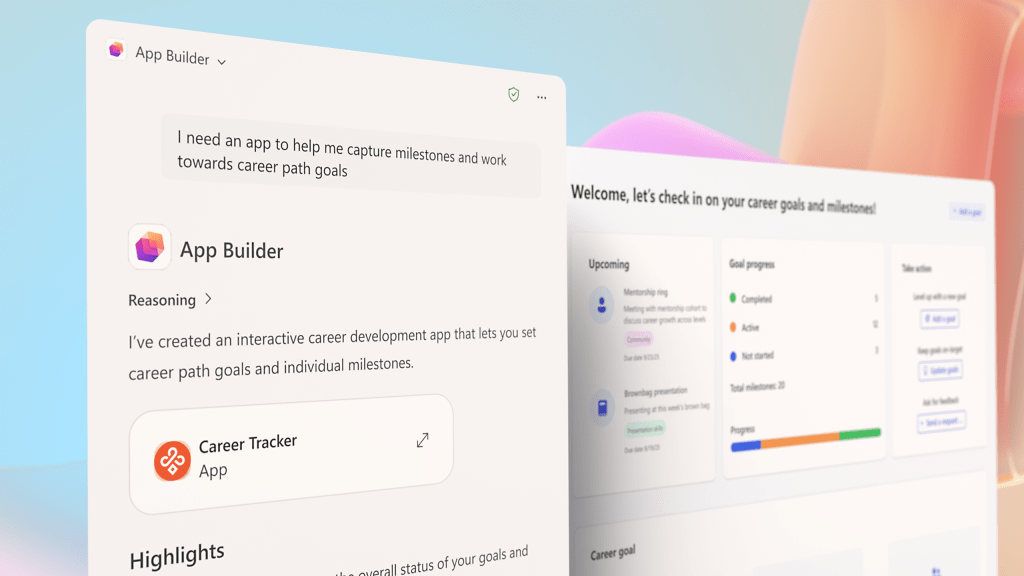
App Builder is the quiet star if your organisation lives on hero spreadsheets and the occasional half finished Power App.

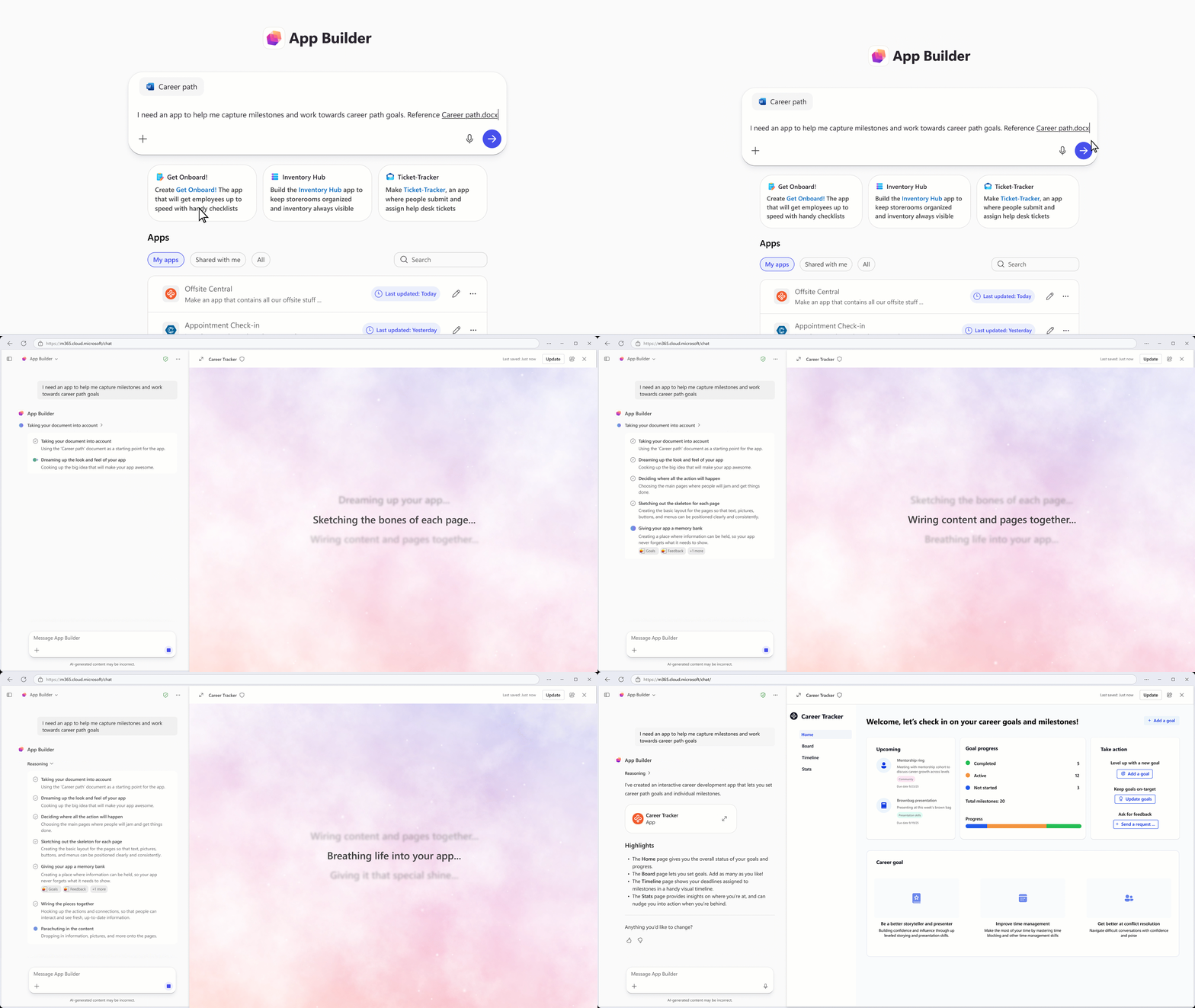
Inside Copilot, you ask for an app that behaves like a proper front end, then refine it through conversation. Need a dashboard, a few charts, or a simple list with status and owners, you describe it and iterate, all without leaving Copilot.

Under the hood, App Builder:

  • Uses your existing Microsoft 365 content, documents, decks, spreadsheets and notes
  • Stores data in Microsoft Lists, so it is structured and reportable
  • Shares like any other file, with links that respect existing permissions

So you keep data in your tenant, avoid another mystery database, and let the people who own the process shape the app. IT can then standardise patterns and controls, instead of hand crafting every single solution.

Workflows for the people who hate workflows
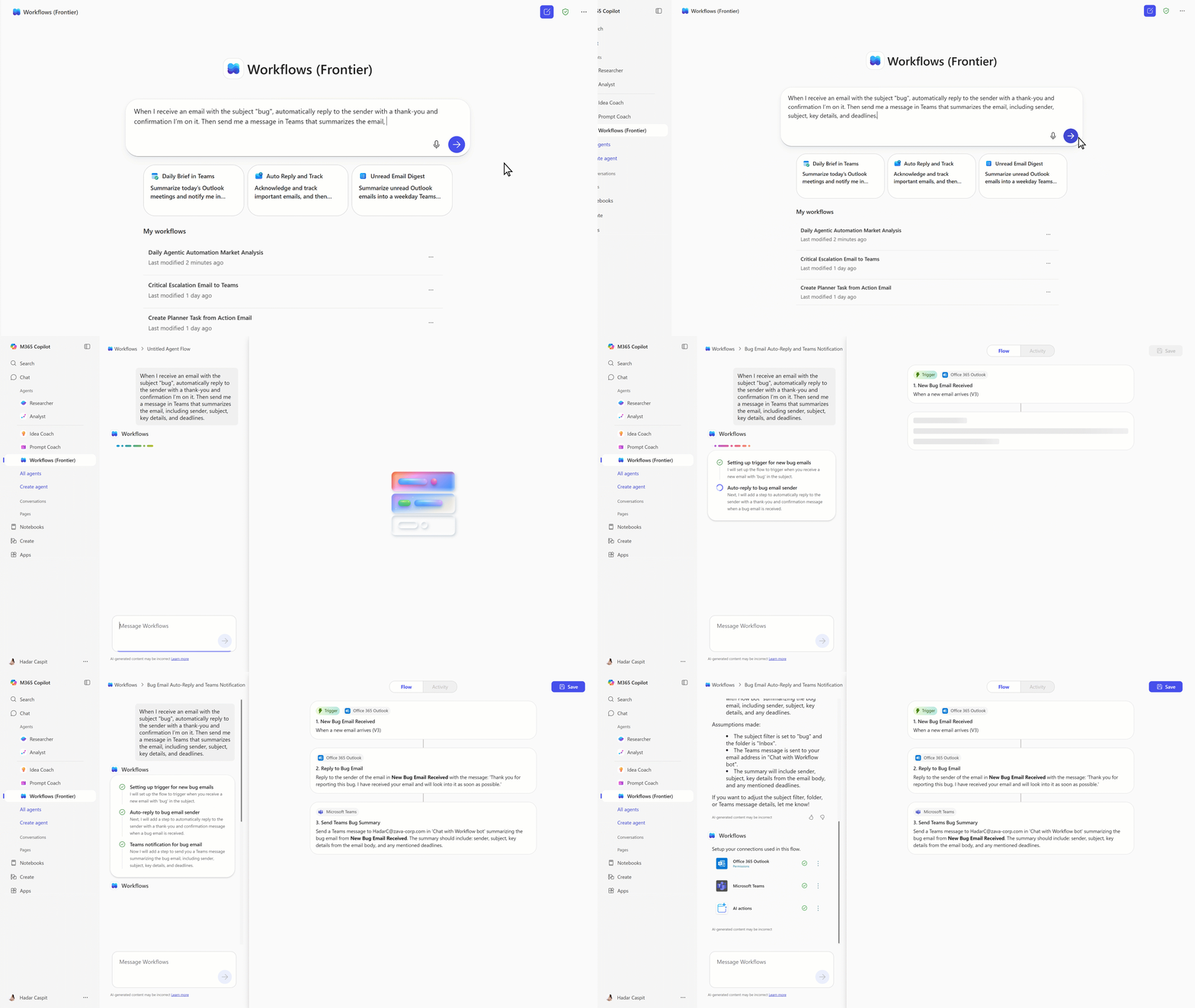
Power Automate is powerful, but most business users do not want to live in a separate flow designer.

The Workflows agent hides that complexity behind a chat. You say something like:

“Every Monday morning, send our project leads a summary of deadlines from Planner, then post upcoming approvals into this Teams channel.”

Copilot turns that into an automated flow across Outlook, Teams, SharePoint, Planner and Approvals, and shows the steps as it builds them. If something looks off, you tweak it in the same conversation.

Workflows is aimed at end users but runs on the same plumbing that powers Agent Flows in Copilot Studio. So you get automation that feels approachable at the front, and enterprise grade reliability at the back.

A mini Copilot Studio in every inbox
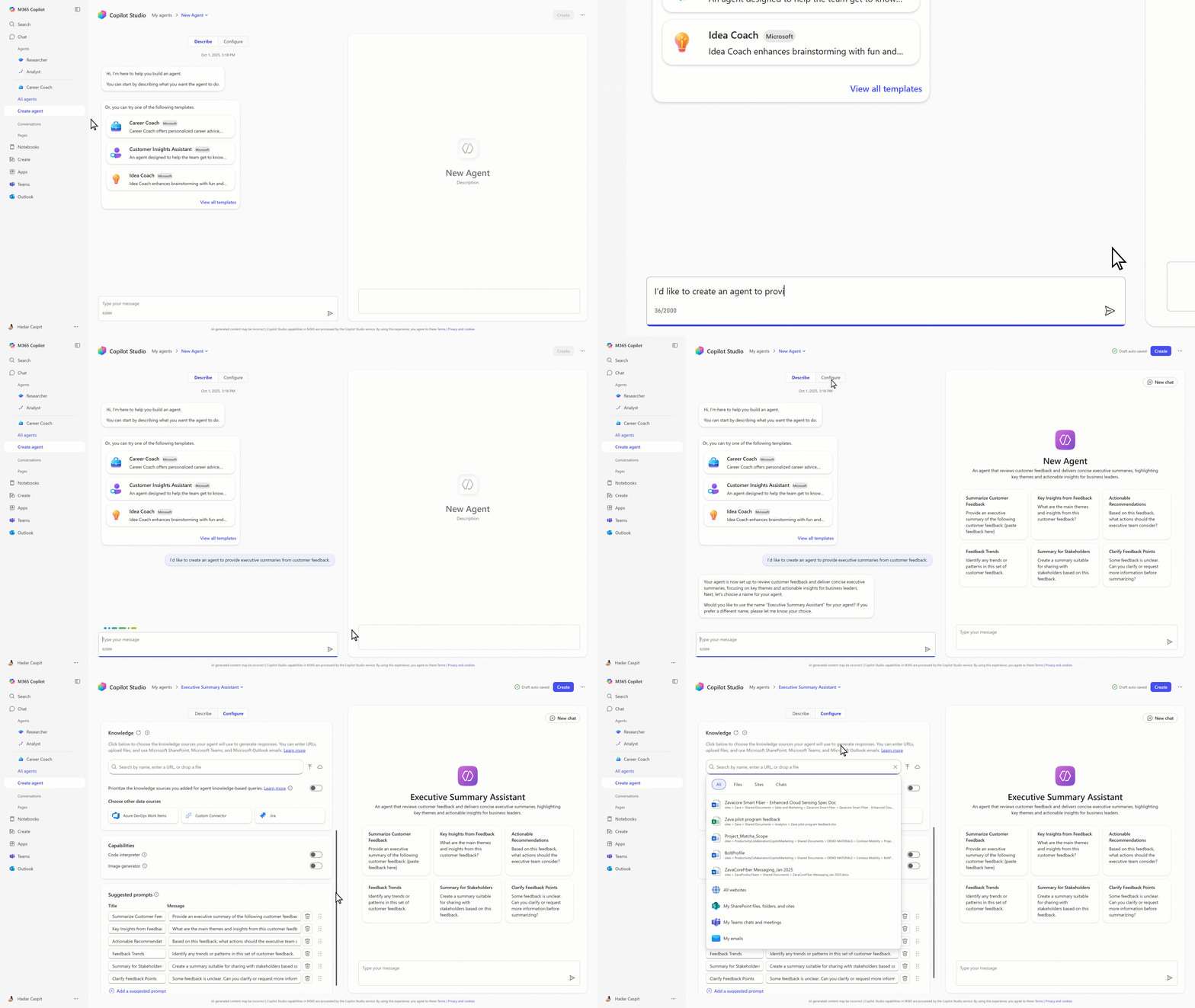
Alongside App Builder and Workflows, there is a lighter Copilot Studio experience directly inside Copilot. You describe the agent you want, Copilot turns that into a structured agent with instructions and logic.

Those agents can draw on:

  • SharePoint sites and libraries
  • Teams chats and meeting transcripts
  • Emails and files across Microsoft 365
  • External systems through connectors like ServiceNow or Jira

So instead of one giant Copilot that knows a bit about everything, you can spin up focused agents for HR policy questions, client playbooks, project onboarding, or incident response. When an agent proves it is genuinely useful, IT can lift it into full Copilot Studio, wire in richer workflows, and bring it under proper lifecycle management.

Governance and control, or why IT will not hate this

App Builder, Workflows and the embedded Copilot Studio experience sit on the same security, compliance and reliability foundation as Microsoft 365 Copilot, with Microsoft 365 data and permissions at the core.

For admins, that means:

  • Central visibility into agents and workflows
  • Role based access for building tools
  • A cleaner story for audit, data residency and access control

You still need guardrails, which processes can be prompt built, when human approvals are mandatory, and where certain systems are always off limits. The difference is that you build on governance you already have, rather than inventing a parallel control model.

Availability and how to experiment

App Builder and Workflows are available as agents in the Agent Store for Microsoft 365 Copilot customers in the Frontier program (GA to come later). You can also create personalised agents through the “Create agent” entry point in Copilot.

If you are in that program, this is the moment to move beyond “summarise this document” and run a small but serious experiment

Pick one noisy process. Launch tracking, approvals, onboarding, status reporting.

Let the business write the first prompt. The people who live the pain describe the app or workflow, IT refines and applies policy.

Set a few clear rules. What data is off limits, where human approvals must stay, when an agent needs review before wider use.

Measure outcome, not theatre. Watch email volume, cycle time, error rates and meeting load. Adjust if nothing actually changes.

My take

Low code has been promising for years that business users can build what they need while IT keeps everything safe. In reality, most organisations have a few heroes, a graveyard of half finished apps, and a backlog that never really shrinks.

By letting people describe the outcome and turning that into apps, workflows and agents inside the tools they already use, Copilot is trying to shave a lot of friction out of that story. Because it sits on familiar building blocks like Microsoft Lists, SharePoint, Teams and Copilot Studio, IT does not have to pretend this is a separate universe.

No, this will not turn every employee into an app designer. You still need patterns, governance, reviews and someone who keeps the ecosystem tidy. But if it shrinks the gap between “we should fix this process” and “we actually did something about it” from months to hours, that is a very real enterprise win.

The better question now is not “can Copilot build for us”, it is “what are the first five things we are brave enough to let it build”.
Copilot in OneDrive, real Modern Work wins, and finally one link that does not break

Microsoft has brought Copilot into the heart of OneDrive. The result is simple, you get answers and summaries next to the files you already use. Below is what matters for enterprise teams, the first features to try, and the guardrails to keep in place.

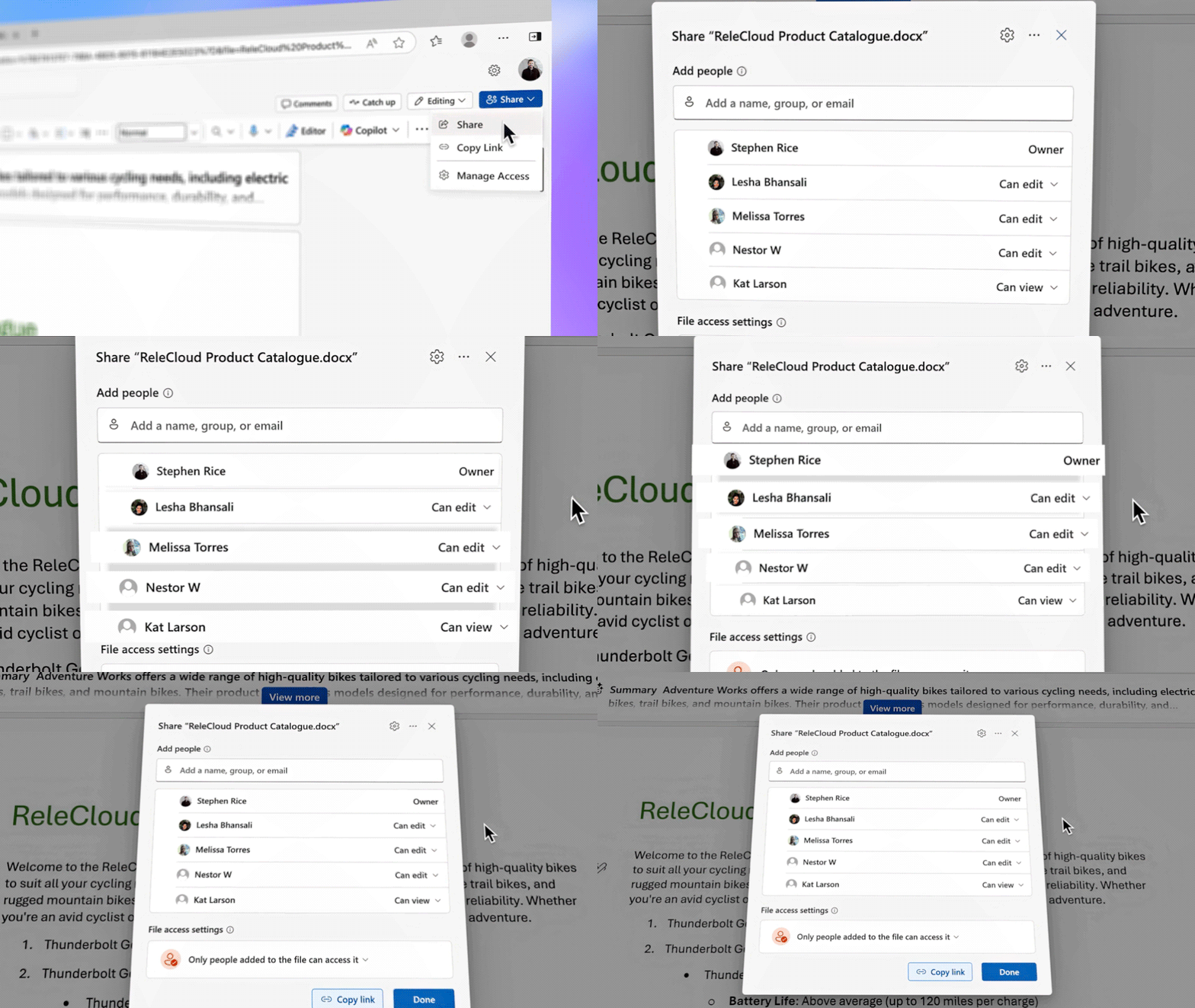
Sharing that does not break your links

Microsoft is moving to a Hero Link model, a single primary sharing link for a file or folder. You can tighten or relax permissions on that same URL as needs change, and you do not force everyone to update bookmarks. Copilot can also add a short description for recipients so they open with context. If you run deal rooms, launches, or project workstreams, this cuts back on the access denied merry go round and reduces duplicate links that cause confusion.

The small button that changes habits

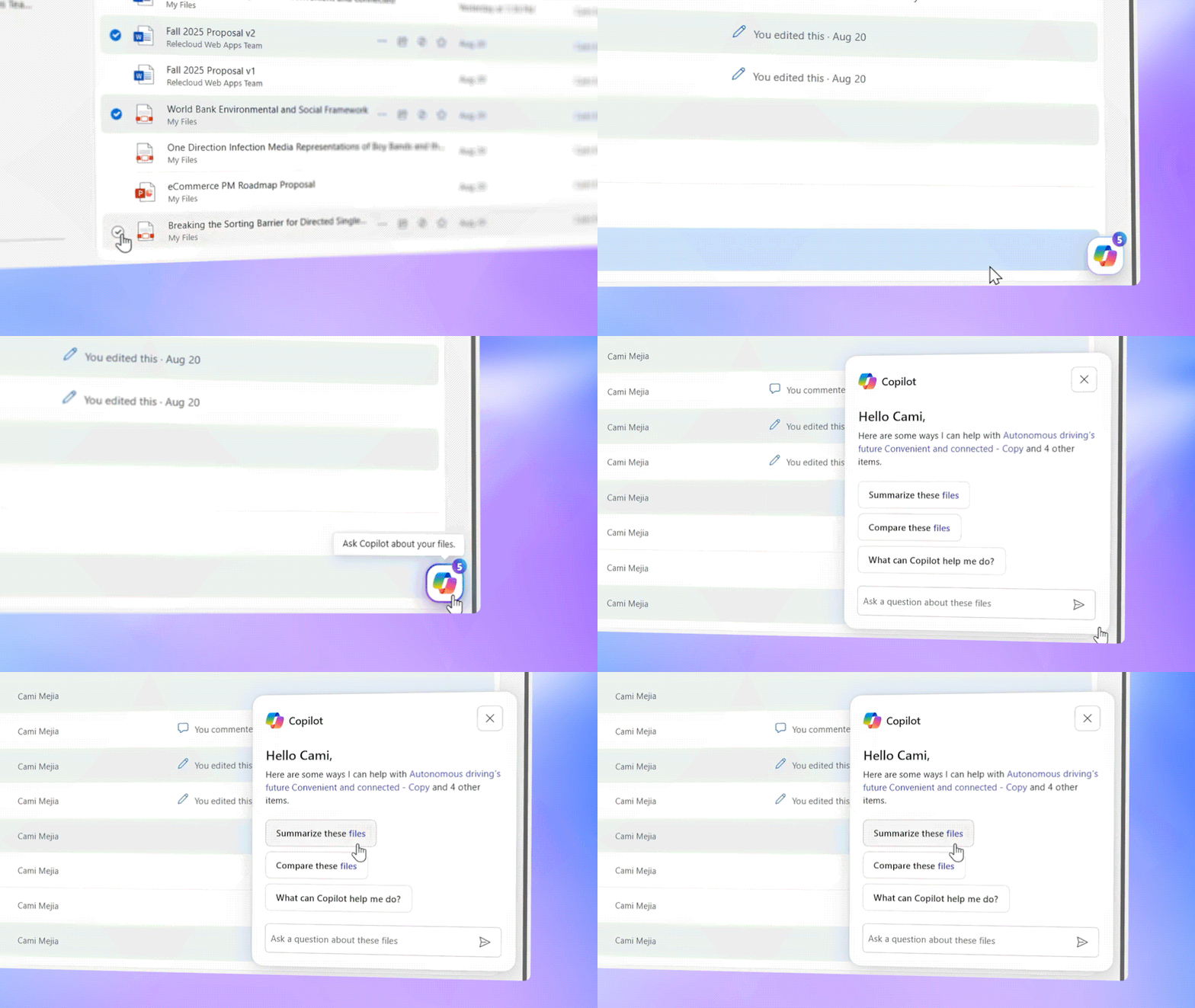
There is a Copilot icon in OneDrive on the web and mobile. Open a doc, deck, PDF, meeting recording, or even a whiteboard image, then ask questions, get a short summary, or compare versions.

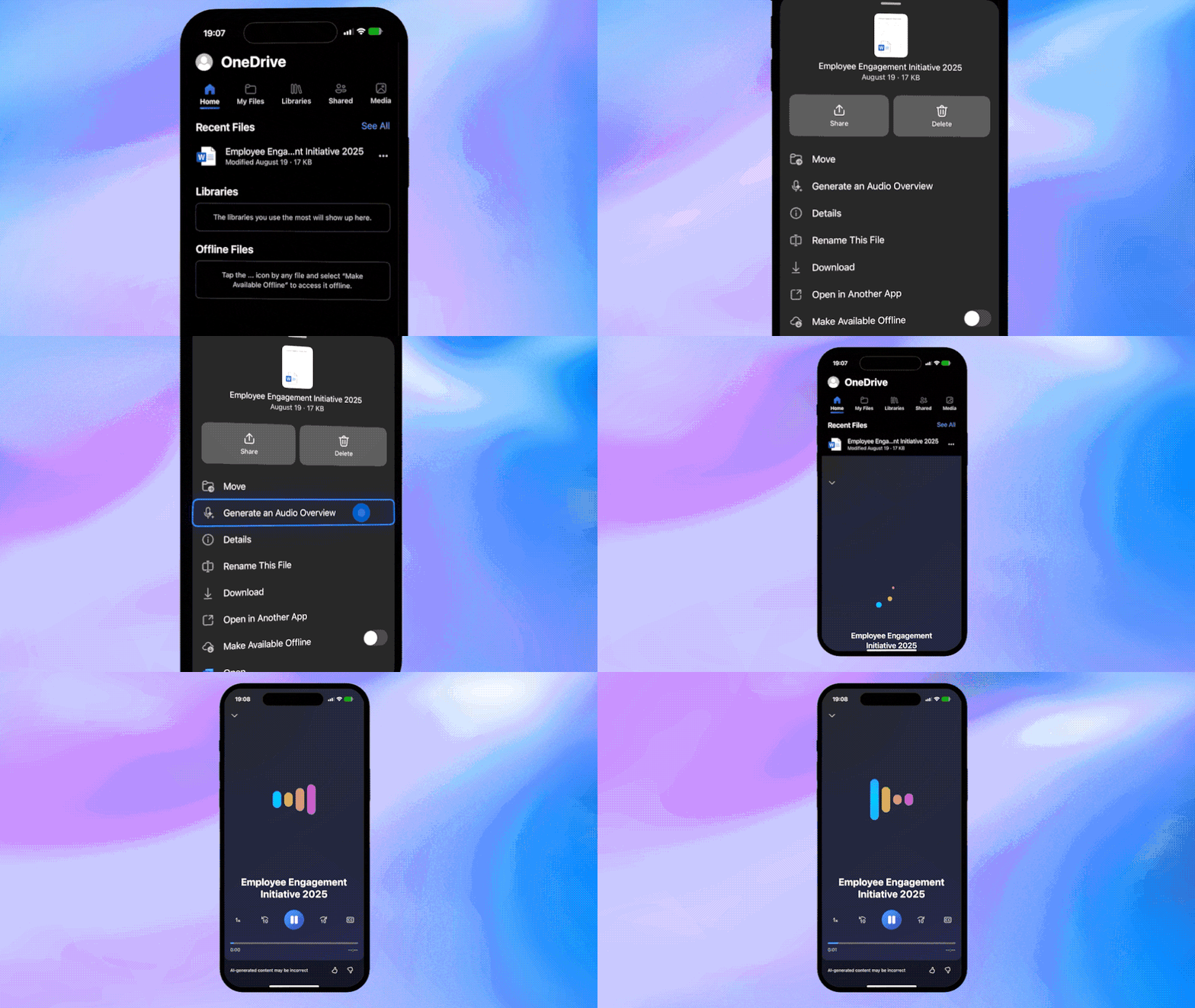
Generate audio overviews

Pick a tone, for example executive or podcast style, and Copilot records an audio brief you can play in the car or between meetings. This is perfect for long decks, monthly reviews, or discovery notes. I have started attaching the audio overview to status updates so sponsors can absorb the key points without opening the file. This is not flashy, it just saves time and helps busy leaders stay in sync.

Cloud first creation that sticks

New Word on Windows, currently rolling out to Insiders, saves to OneDrive by default with autosave. Fewer stray local copies, fewer “which version is the right one” chats. Add to OneDrive lets you pin shared library folders beside your own files, and File Explorer now highlights the people involved so you can jump to Teams or Outlook in one click. Small touches, real impact.

Two admin friendly pieces stand out


Bulk Transfer lets admins reassign a leaver’s OneDrive in a few clicks, with options to hand ownership to an individual or a group. The transfer preserves folder structure and sharing context, so project teams are not left hunting for critical files. Bake this into your joiners, movers, leavers runbook, add an approval step, then track completion as part of offboarding.
Microsoft 365 Archive moves low change spaces out of the way while keeping content discoverable. That keeps Copilot results fresher and reduces noise in everyday search.

What is next

Expect tighter search that returns grounded answers, lightweight agents you can share at the folder level, and a hook into Copilot Researcher so you can jump from files to plans in a few clicks. If you are designing a knowledge operating model for 2026, plan for agents that live with your content and respond in place.

First features to try this week

  1. Copilot on files
    Open a doc, deck, PDF, or meeting recording in OneDrive, then ask Copilot for a summary, action items, or an audio brief. It is the fastest way to turn long content into something you can use.
  2. Hero Link with context
    Share using the Hero Link, then adjust permissions on the same URL as stakeholders change. Add a short Copilot generated description so recipients open with the right context.
  3. Version compare for reviews
    From OneDrive, ask Copilot to compare the current file to a prior version and list what changed, who changed it, and what still needs a decision. Use it before approvals or handoffs.
  4. Estate visibility and continuity
    Turn on the Sync Health Dashboard and set a simple alert for spikes in failures. Add Bulk Transfer to your offboarding checklist so ownership moves cleanly and projects do not stall.

My take

The primary link is the star here. Finally. Years of broken links, permission resets, and new URLs for the same file have trained everyone to ask, can you send it again. One stable link that you can tighten or relax as the audience changes is the obvious fix, and it should have arrived sooner. Pair that with Copilot living next to the file, not in a separate window, and you get a calmer rhythm for daily work. Fewer pings, fewer do you have the latest, more time on the decision you actually need to make. OneDrive is becoming the backbone for everyday knowledge tasks, Copilot is the assistive layer that keeps it moving.

Availability

  • Hero Link, rolling out now through late 2025, timing varies by cloud instance.
  • Audio overviews, live today in the OneDrive mobile app for work or school accounts (English first).
  • Cloud first creation in Word, available in Insider builds now, broader release follows the usual rings.
  • Sync Health Dashboard and Graph Data Connect export, available today in the Microsoft 365 Apps Admin Center.
  • Bulk Transfer, starting to roll out after the October 2025 announcements, cadence varies by tenant and region.

Microsoft Blog post

Microsoft Unleash Productivity Gains with Copilot Wave 2

In an era where digital collaboration and productivity tools are essential for businesses and individuals alike, Microsoft 365 continues to lead the way with its innovative updates and features. The recent unveiling of Copilot Wave 2 brings a wave of new enhancements designed to streamline workflows, foster creativity, and empower users to achieve more in their daily tasks.

Introducing Pages: Elevating Document Collaboration

With the introduction of Pages in Copilot Wave 2, Microsoft 365 is setting a new standard for document collaboration. Pages allow users to create visually appealing and engaging documents effortlessly, combining the power of real-time collaboration with a wide range of multimedia content options. Whether it’s a sleek presentation, a professional report, or a visually stunning brochure, Pages provide users with the tools they need to bring their ideas to life in a seamless and intuitive manner.

Users can choose from a variety of pre-designed templates or start from scratch to customise their documents to suit their specific needs. With the ability to insert images, videos, charts, and more, Pages offer a dynamic and interactive platform for sharing ideas, feedback, and insights with colleagues and stakeholders. Collaboration has never been easier or more engaging, thanks to this innovative addition to the Microsoft 365 suite.

Enhancements across Copilot for M365

Excel: Now includes Python integration for advanced data analysis and visualisation, no coding required.

Example – A financial analyst needs to project next quarter’s sales. Using Excel’s Python integration, they can simply prompt the AI to “forecast sales growth based on the last three quarters.” The AI performs advanced data analysis and delivers insights, including visual charts and graphs. This simplifies data analysis for non-coders, accelerating decision-making.

PowerPoint: The narrative builder helps craft professional presentations quickly, with tools for brand consistency.

Example – A manager preparing for a quarterly business review can leverage PowerPoint’s AI features to swiftly create a presentation. By providing key points such as “sales growth,” “market trends,” and “future strategies,” the AI generates a complete slide deck with charts and bullet points. This enables the manager to focus on refining the content rather than spending time on slide design.

Teams: Copilot now analyses both meeting transcripts and chats, ensuring all ideas and questions are captured.

Example – During a project meeting, participants typically share updates, ask questions, and brainstorm ideas. With Copilot in Teams, the AI generates a comprehensive meeting summary, highlighting key points, action items, and decisions. Afterward, team members receive a concise report, making it easier to track responsibilities and follow-up tasks without needing to review lengthy meeting notes.

Outlook: Use AI to prioritise your inbox, summarizing emails and highlighting key messages.

Example – A support manager receives hundreds of emails each day. Outlook’s AI can sort these emails, prioritise urgent customer complaints, and provide brief summaries. This allows the manager to quickly address critical issues without being bogged down by less important messages. Over time, the AI adapts to the manager’s preferences, improving its ability to flag high-priority emails.

OneDrive: Leverage AI-driven insights to easily search and compare information across your files.

Example – You’re an analyst handling contracts and financial reports, you often need to identify meaningful differences between files. With Copilot in OneDrive, you can save time by quickly comparing up to five files, highlighting key differences in an easy-to-read table format—without even needing to open the files.

Embracing Agents: Personalized AI Assistance at Your Fingertips

Agents represent a new frontier in intelligent virtual assistance, offering personalised recommendations and proactive suggestions to help users optimise their productivity and workflows within the Microsoft 365 environment. Leveraging the power of AI and machine learning, Agents are designed to understand user behaviours, preferences, and patterns, providing tailored guidance and support to streamline tasks and enhance the overall user experience.

From suggesting relevant documents and resources to automating routine tasks and reminders, Agents act as intelligent companions that anticipate users’ needs and offer solutions in real-time. By incorporating Agents into the Microsoft 365 ecosystem, users can benefit from a more personalised, efficient, and intuitive work environment that empowers them to focus on what matters most.

Summary

Microsoft 365 Copilot Wave 2 represents a significant leap forward in reimagining how users collaborate, analyse data, and interact with digital tools in the modern workplace. By introducing innovative features such as Pages, Python in Excel, and Agents, Microsoft is reaffirming its commitment to empowering users with cutting-edge capabilities that drive productivity, creativity, and efficiency.

Although businesses can significantly benefit from these advancements, they must carefully consider the advantages alongside potential data security concerns. As Microsoft rolls out these features, it will be essential for the company to strike a balance between innovation and user trust.

Microsoft 365 Blog: Copilot Wave 2 announcement post here.